Plain Language Summary
Japanese knotweed contains resveratrol and other plant compounds. Its extract has been tested against Lyme disease bacteria in a lab, but a lab result cannot tell us whether it treats Lyme disease in people. Antibiotics remain the established treatment.
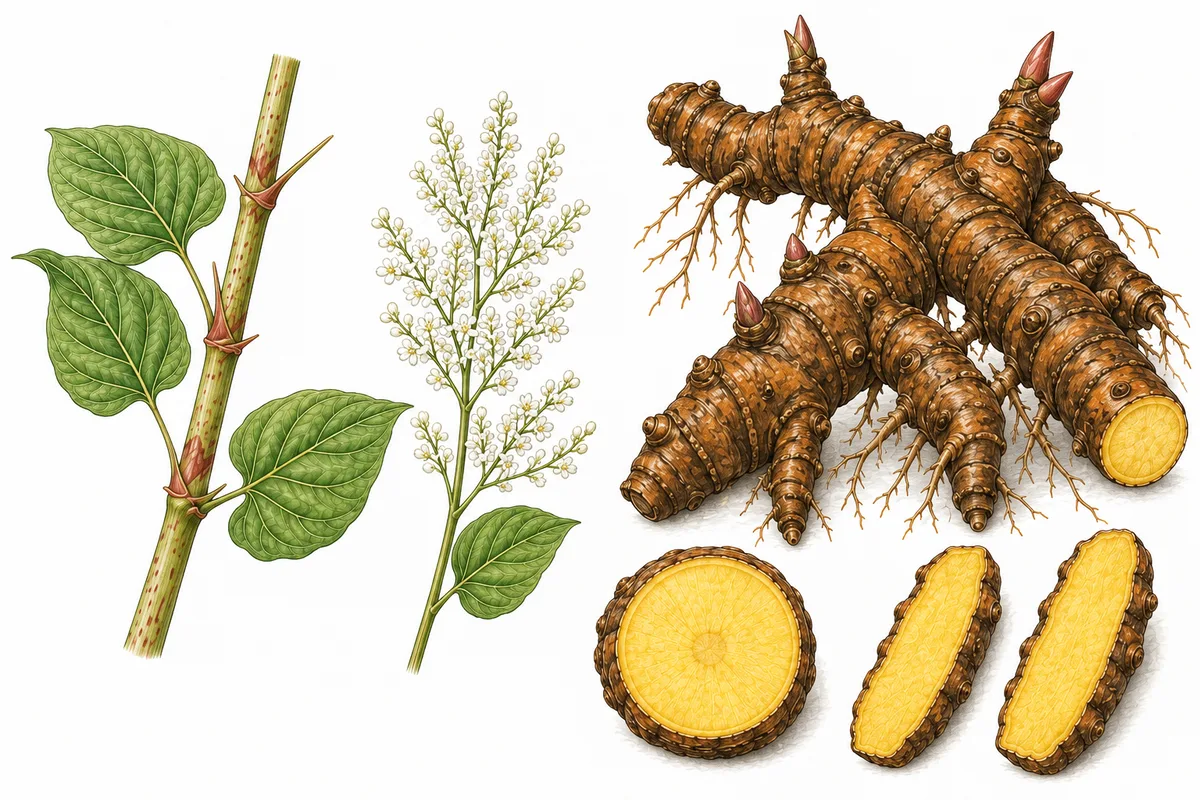
What It Is
Japanese knotweed is a fast-growing plant native to East Asia. It has spread widely outside that region and is invasive in many places. Its roots contain compounds including resveratrol and emodin. Products made from the whole root are not the same as isolated resveratrol used in some human studies.
Traditional Uses
- Inflammation
- Liver conditions
- Constipation
- Cardiovascular support in traditional Chinese medicine
Mechanism of Action
Laboratory work has examined the plant extract against Borrelia burgdorferi, the bacterium that causes Lyme disease. Other work examines resveratrol and emodin in cell-based pathways related to inflammation. These proposed mechanisms do not establish a treatment effect in people, and the result may differ by extract and concentration.
Human Research Highlights
- The cited research does not show that Japanese knotweed extract treats Lyme disease in people. The antibacterial study tested extracts in a laboratory, not patients.
- Some human studies examine isolated resveratrol for metabolic or cardiovascular outcomes. They cannot be used as proof that a Japanese knotweed product has the same effect.
- There is no established clinical benefit for persistent symptoms after Lyme treatment from the sources reviewed here.
Preclinical & Laboratory Research
- A 2020 laboratory study found activity from Polygonum cuspidatum extract against forms of B. burgdorferi under test conditions. It did not test treatment in people.
- Cell and animal findings about isolated plant compounds are useful for deciding what to study next, but cannot establish human benefit or a safe dose.
Dosage Studied
The cited laboratory findings do not establish a human dose for Lyme disease. Do not infer a treatment regimen from resveratrol studies or laboratory concentrations.
Safety Notes
- The safety of whole-root extracts over long periods is not well established in human trials.
- Products differ in their plant material, extraction methods, and compound concentrations.
- Discuss use with a clinician if you take medicines, are pregnant or breastfeeding, or have an ongoing medical condition.
Drug Interactions
- Reliable clinical interaction data for whole Japanese knotweed extracts are limited; do not assume findings for isolated resveratrol apply to every extract.
- A clinician or pharmacist can review the exact product alongside prescription medicines.
Research Gaps
- Controlled human studies of the extract for Lyme disease outcomes.
- Standardized products and concentrations that can be compared across studies.
- Human safety and interaction data for whole-root extracts.
- Whether findings from isolated resveratrol transfer to the whole plant.
Clinical Relevance
The useful distinction is between activity in a dish and recovery in a person. The plant deserves further study, but it is not a proven substitute for antibiotics. The CDC identifies appropriate antibiotics as treatment for Lyme disease.
Citations
- Feng J et al. Evaluation of Natural and Botanical Medicines for Activity Against Growing and Non-growing Forms of B. burgdorferi. Frontiers in Medicine. 2020. Read source
- CDC. Treatment and Intervention for Lyme Disease. Updated June 25, 2026. Read source
Disclaimer: Educational information only. Not medical advice. Consult a qualified healthcare professional before use.
Last updated: September 23, 2026